Overtime Is Not a Plan: The Firefighting Premium Hidden in UK Maintenance Budgets
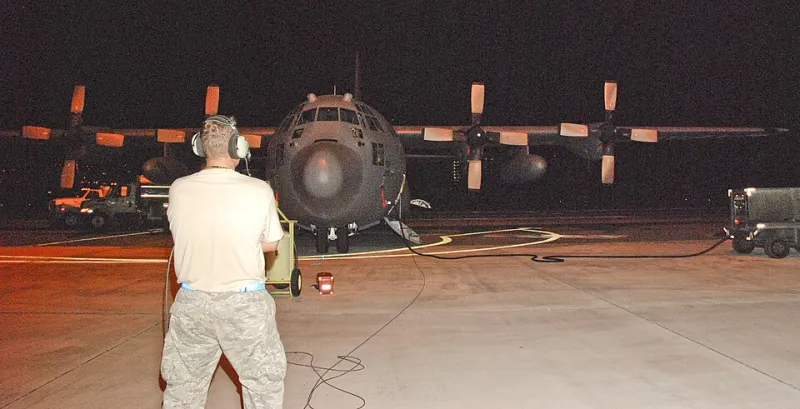
Photo: Master Sgt. Stanley Coleman, Public domain, via Wikimedia Commons
On many UK sites, the maintenance team's worth is judged by how quickly it responds. A crew that turns out every weekend to keep the line running is praised, and rightly so in the moment. The question that goes unasked is why the plant requires it so often.
Overtime has entirely legitimate uses: outage cover, standby rotas, seasonal peaks, a shortage of a scarce skill. The difficulty arises when it becomes habitual — when the weekly pattern of emergency calls and Saturday call-outs is not an exception but the operating model. At that point the organisation is not running a maintenance strategy. It is running an unplanned one, and paying for it in several places at once.
Commitment, or compensation?
The symptoms are recognisable. The same asset fails repeatedly and is nursed back into service each time. The same component is bought three different ways, none of them the cheap one. Planned work is deferred to release labour for breakdowns. The annual shutdown is never long enough because the backlog it is meant to absorb keeps growing. The stores hold parts that were bought in a hurry and never used again.
None of this looks like a policy failure on the shop floor. It looks like effort. That is precisely why it persists.
The costs that never appear on the overtime line
Fatigue and error. Call-outs at 2am followed by a day shift produce work that has to be redone. The HSE's guidance on fatigue is unambiguous about the effect on error rates and safety behaviour, and the rework is rarely attributed back to the schedule that caused it.
Expedited spares. Premium freight, courier charges, minimum order values and the loss of any volume leverage all sit outside the maintenance budget line where they belong. They accumulate in procurement as small, individually justifiable transactions.
Lost contribution. Downtime is often valued at revenue, which overstates it, or not valued at all, which understates it. The honest figure is contribution — the margin the plant would have made on the output it did not produce — plus the scrap, off-specification material and quality holds that follow a restart.
Contractor call-out minimums. A four-hour minimum attendance, a weekend multiplier and a mobilisation charge add up quickly when used as a routine rather than an escalation.
The compounding backlog. Every deferred preventive task and every postponed capital item becomes a future emergency. The cost is not avoided; it is warehoused, with interest.
Building the number in four steps
First, separate the labour. Take twelve months of clocked hours and split them into planned work, reactive work and the overtime premium portion. Count only the premium, not the whole hourly cost, or the figure will be double-counted against lost output.
Second, count the transactions. Emergency work orders, expedited purchase orders, contractor call-outs and the number of production curtailments. Transaction counts are persuasive because they are hard to argue with and easy to audit.
Third, value the lost output at contribution. Ask finance for the standard contribution rate per unit or per machine hour, multiply by the hours or units lost, and be candid where buffer stock absorbed the shortfall. Understating the loss is more credible than inflating it.
Fourth, annualise and compare. Set the total against the cost of the intervention: a planner's salary, condition monitoring on three critical trains, a control system upgrade, or the proper repair of the top five recurring failure modes.
As an illustration only, a mid-sized site recording sixty emergency call-outs a year might carry £35,000 of overtime premium, £20,000 of expedited spares, £12,000 of contractor minimums and around 120 hours of lost contribution at £900 an hour. That is in the region of £175,000 a year — roughly the cost of two well-chosen reliability projects, which would then keep delivering after the first year.
Triage before planning
Planning cannot begin while everything is urgent. A priority matrix built on safety, regulatory exposure, production consequence and cost gives the supervisor something objective to apply, and a single gatekeeper — planner or maintenance lead — should be empowered to downgrade. Requiring the requester to state what happens if the job waits twenty-four hours filters a surprising proportion of so-called emergencies. Most sites that try it find a fifth to a third of urgent work can be scheduled without consequence.
Plan the week, not the quarter
A weekly schedule, frozen once agreed except for genuine priority one events, is the mechanism that converts intention into hours. Track schedule compliance, the proportion of labour covered by the plan, and the backlog expressed in crew-weeks rather than job counts. A backlog nobody can size is a backlog nobody will reduce.
Follow up, or repeat the same failure
Root-cause review should be reserved for the small number of assets responsible for the largest share of downtime — usually fewer than ten. A half-hour review with the fitter who did the repair is often enough. The most common finding is that the preventive task in the system does not address the failure mode at all: a monthly greasing round will not correct a misaligned coupling, and an annual inspection will not detect a bearing that is degrading in six weeks.
Where capital fits
The firefighting premium is recurring operating expenditure, which makes it unusually easy to build a capital case against. Target the two or three assets generating the greatest share of emergency work and present the investment as the removal of a known annual cost rather than as a promise of fewer breakdowns. Replacement, control upgrades and permanent condition monitoring on critical trains all compete well on that basis, particularly when the avoided cost is already visible in the accounts.
What to measure a year on
Reactive-to-planned ratio by labour hours, overtime as a share of total maintenance hours, schedule compliance, preventive task completion and effectiveness, expedited purchase orders per month, and repeat failures on the top ten assets. Five measures are enough; more will not be maintained.
A fair word on goodwill
None of this argues for abolishing overtime. Outages, emergencies and seasonal demand are real, and a team that responds well is an asset. The argument is about knowing what habitual firefighting costs, choosing it deliberately where it is genuinely the cheapest option, and refusing to describe it as a plan.
If the maintenance strategy can be summarised as working harder when something breaks, it is not a strategy. It is a price list, and the invoices arrive monthly.