Fifteen Minutes a Week: A Walkaround Routine That Catches Plant Faults Early
Photo: U.S. Air Force photo by Senior Airman Jonah Bliss, Public domain, via Wikimedia Commons
Most UK plants that operate without a dedicated reliability team nonetheless inherit the same failure modes as sites with a full condition-monitoring programme: bearings that fail early, compressed-air leaks that are never chased down, oil that is changed late, and heat exchangers that foul quietly until a process trips.
The difference between the two is seldom instrumentation. More often it is rhythm — whether somebody walks the plant on a fixed day each week and writes down what they find.
Fifteen minutes will not replace thermographic surveys, vibration analysis or the statutory examinations required under PUWER and LOLER. It will, however, catch the majority of faults while they are still inexpensive: a bearing running a few degrees warm, a coupling that has begun to sound different, a flange that has started to weep.
Set the route before you set the form
A walkaround is a patrol, not a tour. Fix the sequence and keep it identical, so that the same asset is viewed from the same angle at the same point in the shift. Start at the plant room, work downstream through the process, and finish at the compressors or the boiler house.
Twenty to thirty assets is a realistic load for a quarter of an hour. Where a site carries more, split the route — north plant one week, south plant the next. Number every asset and put the number on the machine, not only on the drawing. An observation tagged to asset 14 is actionable; an observation about the pump by the tank is not.
Walk at a time when the plant sounds normal. Production noise masks bearing noise; end of shift, a changeover, or a quiet Sunday morning will reveal it.
What to look, listen and measure for
Bearings and drives. Listen at each motor for a change in pitch — a whine, a rumble, a tick. A long screwdriver held against the housing, handle to the ear, remains a serviceable improvised stethoscope. Then measure: infrared thermometer readings at the drive end, the non-drive end and the gearbox, recorded against ambient temperature, will show a trend over weeks where a single reading shows nothing at all. A rise of 10°C above that asset's own baseline, or a spread of more than 15°C between drive and non-drive ends, justifies investigation.
Never judge temperature by hand on a running machine or a hot surface. Use the instrument; use the back of the hand only on isolated, cool equipment.
Lubrication. Check sight glasses for level and colour. Milky oil points to water ingress; oil that has turned black in a gearbox that was clean last month points to distress. Note grease points that have gone untouched and automatic lubricators that have run dry.
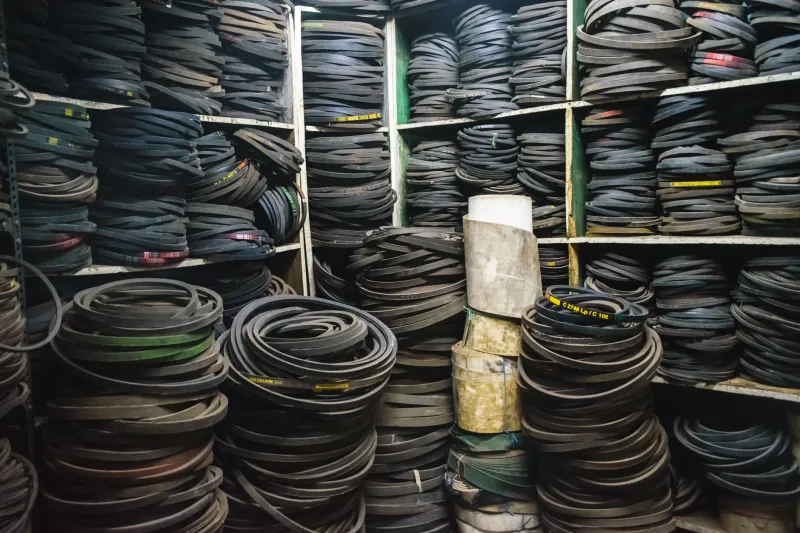
Belts, couplings and guarding. Look for belt dust, glazing, fraying and slack. Confirm that guarding is present and properly fixed — that is a legal duty under PUWER 1998, not a housekeeping preference, and a missing guard is an immediate stop-and-report item.
Compressed air. Leaks are best found by ear during quiet periods, then confirmed with soap solution at joints, unions and drain valves. The economics are stark: a 3 mm hole in a 7 bar system can waste well over £1,000 of electricity across a year at current industrial tariffs, and most sites carry several.
Temperature and insulation. Look for damaged lagging, stained cladding and steam plumes at trap discharge points. Discoloured or scorched paint around electrical enclosures should be reported, not investigated by anyone who is not competent to open the panel.
Housekeeping. Oil on the floor, spillage without suitable absorbent, waste stacked against a heater, blocked escape routes, materials stored where a MEWP needs to stand. Under DSEAR, dust and flammable waste accumulating near ignition sources deserves more than a passing glance.
Record it on one page
The recording method should be simple enough to survive a busy week. A single A5 sheet with columns for asset number, observation, severity, action, owner and date closed is sufficient. Photograph anything unusual with the date stamp enabled; a photograph taken in week one and repeated in week six is the most persuasive trend data most sites own.
Keep the sheets in one folder, physical or shared, and keep a one-line-per-asset trend log for temperature and noise observations. The value of the routine lies entirely in the comparison between weeks.
Decide in advance when to escalate
Thresholds agreed in the office, before anyone walks the plant, remove doubt from the person holding the clipboard. A three-level scheme works well:
- Red — stop and report the same day. Smoke or a burning smell, exposed conductors, damaged lifting accessories, missing guarding, a gas or refrigerant smell, an uncontrolled leak, or a machine that has visibly moved or cracked its foundation. Escalate to the shift manager and raise a work order immediately.
- Amber — raise within the week. A temperature trend climbing across three readings, new bearing noise, oil misting, a weeping joint, a failed steam trap, a damaged guard fixing. Book the work into the next planned window.
- Green — log and review monthly. Housekeeping, labelling, minor seepage, worn floor marking. These belong on a clean-up list, not on the engineering backlog.
Anything meeting the RIDDOR criteria for a dangerous occurrence should follow the site's statutory reporting route regardless of the walkaround's own severity rating.
Make the routine survive its first quarter
A walkaround dies when it belongs to one person. Rotate the walker, name a deputy for leave and sickness, and have a supervisor review the sheets monthly to confirm that amber items have actually closed. If findings sit open for weeks, the team will conclude — correctly — that the exercise is theatre.
What it will not do
The walkaround is a triage layer, not a condition-monitoring programme. It does not discharge duties under PUWER, LOLER, PSSR or the Electricity at Work Regulations, and it is no substitute for competent-person examinations, thermographic surveys of distribution boards or oil analysis on critical gearboxes.
What it does is buy time — and on most UK sites, time is the difference between a bearing changed on a Tuesday afternoon and a production line lost for a weekend.