Spares That Earn Their Shelf Space: A UK Plant Review Framework
The stockroom as an insurance policy
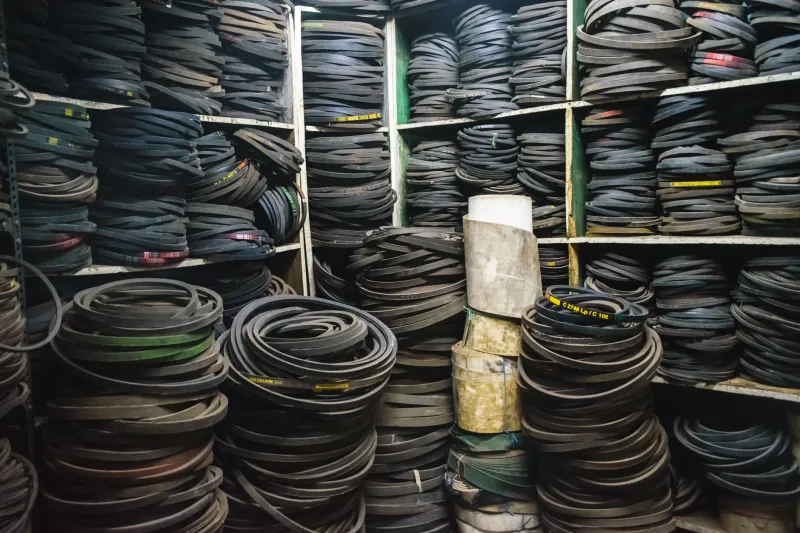
Critical spares are not ordinary inventory. They are a physical insurance policy against failures that the plant cannot tolerate, and they deserve to be judged on that basis. Yet many UK plant teams inherit stockrooms shaped by past failures, OEM recommendations, site transfers and the universal instinct to keep one more just in case. The result is a familiar paradox: too much capital tied up in parts that may never be used, alongside genuine anxiety that the one essential item is missing.
Reducing spares is therefore not simply a finance exercise. It requires a clear view of consequence, lead time and substitutability. A part is only critical if its absence would cause unacceptable downtime, safety exposure or regulatory difficulty. If the plant can run safely to the next planned stop, or the item can be repaired, substituted or sourced quickly, it is not insurance stock in the strict sense.
Why spares budgets drift
Spares holdings tend to grow for understandable reasons. A failure occurs, a replacement is bought in haste, and the leftover components remain. An OEM recommends a kit, and the kit is stocked as a package even though only one item is slow-moving. A site closes, and its stock is absorbed without review. Over time, the stockroom becomes a record of past anxieties rather than a forward-looking maintenance plan.
The cost is wider than the purchase price. Holding costs include capital, storage space, insurance, inspection, administration and the risk of obsolescence. In the UK, extended supply chains and customs arrangements can stretch lead times for imported components, which encourages extra cover. But long lead times also increase obsolescence risk: a part may sit on the shelf for years while the asset it serves is modified, replaced or retired. A sparing strategy that ignores asset lifecycle is not conservative; it is simply expensive.
The insurance-versus-habit test
A useful starting point is to ask five questions for each stocked item:
- What happens if this part is unavailable during a failure?
- Can the plant run safely, or at reduced output, until a replacement arrives?
- Is there a standard substitute, a repair route or a temporary bypass?
- What is the realistic lead time, including goods-in and fitting time?
- Is the failure credible, or is the item stocked because it failed once in another decade?
Where the consequence is severe and the lead time exceeds tolerable downtime, the part is a candidate for insurance stock. Where the consequence is manageable or the item is readily available, it is a candidate for removal, vendor-managed stock or a repair arrangement. The distinction matters because insurance stock should be protected and reviewed, while habit stock should be challenged.
An ABC-style review that uses criticality, not just value
Traditional ABC analysis ranks stock by annual usage value. That is useful for purchasing, but it can mislead maintenance. A low-value sensor may be far more critical than a high-value spare for a redundant pump. A better approach is to combine criticality with lead time and demand pattern.
A practical split is:
| Class | Typical profile | Stocking intent |
|---|---|---|
| A - Insurance | High consequence of failure, long lead time, no easy substitute | Hold at least one protected unit, with a defined storage and inspection regime |
| B - Operational | Moderate consequence, variable lead time, some substitution possible | Hold against realistic lead-time demand, with a safety margin based on failure history |
| C - Consumable or standard | Low consequence, short lead time, readily available | Hold minimal stock or use vendor-managed arrangements |
This is not a licence to cut A items. It is a way to concentrate attention and capital where they genuinely protect availability. A items should be reviewed annually and after any relevant failure. B items should be reviewed quarterly. C items can be reviewed monthly or managed through supplier agreements.
Setting min/max levels without guesswork
For each part, the minimum level should reflect expected demand during the replenishment lead time plus a safety margin. For true insurance spares, however, the arithmetic often collapses to a simple rule: minimum equals maximum equals one protected unit. That is not laziness; it is recognition that the part is held for consequence, not consumption.
For consumables and operational spares, min/max should be based on usage history, lead time and variability. A part used twice a year with a twelve-week lead time may need one unit held, not four. A filter used weekly with a two-week lead time may need a small rolling buffer. The maximum level should also account for storage life, cubic space and the cost of tying up cash. A blanket rule of two of everything is rarely defensible.
Data, governance and change control
The review depends on clean data. Failure history, lead times, downtime costs and asset criticality should be visible in the CMMS or asset register. Where data is thin, start with the highest-consequence assets and interview the technicians who maintain them. Supplier lead times should be verified rather than assumed, and repair routes should be documented.
Governance matters as much as analysis. Without change control, the stockroom will drift back to its old shape. New stock should require approval against the same criticality test. Free-issue items should be recorded. After a significant failure, the team should ask whether the stocking decision was correct, not simply order another unit.
A pragmatic 90-day sequence
A workable programme is to spend the first month extracting stock lists, usage history and asset criticality. In the second month, classify the top hundred items by consequence and lead time, then challenge the obvious habit stock. In the third month, reset min/max levels, agree review dates and brief the stores and maintenance teams. The aim is not a one-off purge. It is a repeatable process that keeps spares aligned with the plant as it changes.
Apex Engineering Services works with UK plant teams on maintenance strategy and asset criticality reviews. The most durable savings usually come not from cutting the deepest, but from understanding which parts are genuinely holding the plant together and which are merely holding shelf space.