The Inherited List: Rebuilding Asset Criticality on Evidence
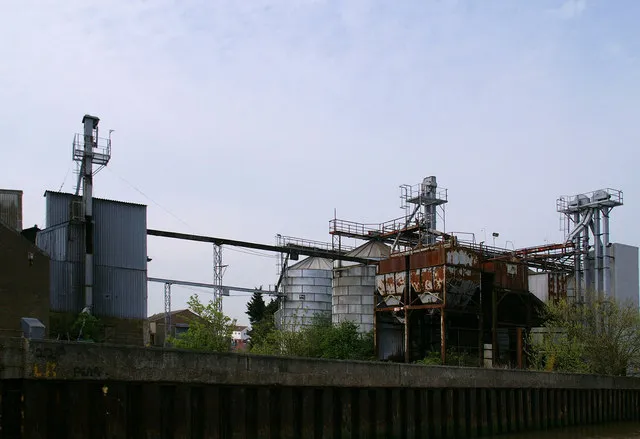
Photo: Pierre Terre, CC BY-SA 2.0, via Wikimedia Commons
Asset criticality is one of those documents that every plant possesses and few genuinely trust. It is usually produced during a reliability initiative, a capital project or an audit response, then filed away as though the judgement were permanent. By 2026, many UK sites are operating with criticality lists that predate changes in equipment, product mix, regulatory expectations and supply chains. The result is a quiet but costly form of false confidence: the maintenance plan looks deliberate, but its priorities may be inherited rather than evidenced.
Why an inherited list becomes a liability
A criticality register is not simply a ranking of expensive assets. It is a statement about where maintenance attention should go when resources are finite. When that statement is inherited, it often reflects the concerns of a previous era. A production line that once ran flat out may now be a bottleneck only during seasonal demand. A utility asset that was considered secondary may now sit behind a permit condition or an environmental risk that carries serious consequences. Conversely, an asset with a high capital value may be robust, well-supported by spares and easy to repair, making its operational criticality lower than its balance-sheet prominence suggests.
The trap is not that teams are careless. It is that criticality feels like a known quantity. Planners, supervisors and engineers carry a mental model of which assets matter, and that model is rarely tested against current evidence. The practical remedy is not another software module or a more elaborate scoring formula. It is a structured workshop that forces assumptions into the open and tests them against safety, environmental, operational and maintenance realities.
Prepare the evidence, not just the spreadsheet
Before the workshop, cleanse the asset register so that participants are scoring the same items. Group small components under the parent system where that reflects how maintenance is actually planned, but keep separately critical items visible. Gather recent work orders, failure history, downtime records, statutory inspection findings, environmental incidents and near misses. Add current spares information: lead times, obsolescence risk, minimum stock levels and whether an item can be substituted or repaired locally.
Invite a small but mixed group. A facilitator is useful, but the substance should come from operations, maintenance, engineering, safety and environmental representatives. A planner should attend because the output must be usable in planning. A stores or procurement representative can speak to spares reality. Keep the group to a manageable size, perhaps six to ten people, so that challenge is possible without the session becoming a lecture.
Ask each participant to pre-score a sample of assets independently. This is not to create a vote, but to reveal where perceptions diverge. The divergence is often more useful than the average score. If operations considers an asset low risk while maintenance considers it a recurring problem, the workshop has found something worth examining.
Score what changes the maintenance response
A practical criticality model should be broad enough to capture consequence but simple enough to apply consistently. Five dimensions are usually sufficient for a UK plant workshop: safety, environmental risk, production impact, spares and repair exposure, and repair complexity. Each dimension should use defined bands rather than a free 1 to 10 scale. Clear definitions reduce the temptation to score by instinct.
Safety should consider potential harm, not just historical incident frequency. Environmental risk should include statutory duties, pollution potential, consent conditions and the effort required to contain a release. Production impact should reflect the consequence of unavailability at the relevant demand period, not simply the asset's normal output. Spares and repair exposure should weigh lead times, single-source items, obsolescence and the feasibility of temporary repair. Repair complexity should reflect specialist skills, access requirements, lifting or confined-space work and the likelihood of extended reinstatement.
Avoid false precision. A criticality score of 87 out of 100 suggests a certainty that the evidence rarely supports. Bands such as low, medium, high and very high are easier to defend and use. If a weighted matrix is required, keep the weights explicit and review them when business conditions change. Safety and environmental consequences should not be capable of being outvoted by production value alone.
Run the workshop as a challenge session
The facilitator's role is to ask for evidence, not to seek consensus too quickly. For each asset, invite the pre-scores, then ask what justifies the difference. Has the asset caused unplanned downtime in the last three years? Is there a statutory inspection finding outstanding? What is the current lead time for the critical spare? Can the duty be covered by a standby unit, and has that standby been tested?
Record the rationale, not just the score. A short note explaining why an asset was raised or lowered is more valuable than a clean spreadsheet with no traceable reasoning. Where the group cannot agree, assign an action to gather evidence and revisit the item. This is preferable to forcing a decision that will be quietly ignored later.
Convert scores into maintenance priorities
Criticality only earns its keep when it changes what gets planned first. Use the output to shape the maintenance strategy, not merely to colour a register. Very high criticality assets should have explicit failure modes, condition-based tasks where suitable, tested spares provisions and a planned intervention route. High criticality assets should be reviewed in the weekly planning meeting and included in shutdown scope discussions. Medium and low criticality assets may tolerate run-to-failure or deferred intervention, but that decision should be recorded.
Link the register to spares policy. A high-criticality asset with a long-lead spare is a planning risk even if its failure rate is low. Link it to the shutdown programme. An asset that cannot be maintained safely without a shutdown should influence outage scope and duration. Link it to work-order prioritisation so that planners can see why one job outranks another when resources are tight.
Set review triggers, not just an annual date
An annual review is better than none, but it can leave the register stale for months. Define triggers that prompt a re-score: a significant failure, a change in product or throughput, a new environmental permit condition, a spares obsolescence notice, a capital modification or a change in standby arrangements. Keep the workshop method consistent so that later reviews are updates rather than rebuilds.
The criticality trap is not solved by producing a better document. It is solved by treating the register as a live maintenance decision tool, owned by the people who plan and execute the work. A plant that can explain why its most important assets are ranked as they are, and show that the ranking changes its planning behaviour, has moved beyond inherited assumptions. That is a more useful outcome than a perfect score.