Cold Snap Calculus: A Ranked Pre-Frost Check for UK Plant
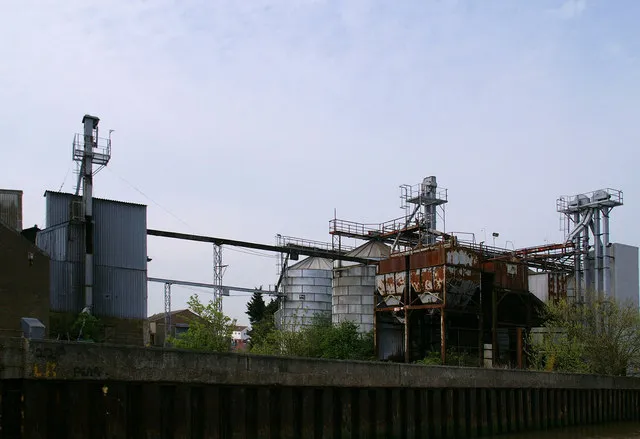
Photo: Robin Stott, CC BY-SA 2.0, via Wikimedia Commons
The first hard frost rarely announces itself with much ceremony. A clear night, a sharp drop after a mild week, and by the following morning a site that looked entirely serviceable the day before has a burst line, a locked-out dryer or an instrument reading that no longer agrees with reality. The irony is that most UK plant sites already hold a winterisation checklist. The difficulty is that these documents tend to grow by accretion, acquire dozens of equal-looking lines, and are quietly abandoned by the second week of December.
The alternative is not a longer list. It is a shorter one, ordered by consequence. A ranked pre-frost check accepts that maintenance teams have finite hours in November and concentrates those hours where a cold-related failure would cause the greatest disruption. What follows is a practical method for building that ranking, with particular attention to four asset groups that consistently repay the effort.
Why the Standard Winterisation List Underperforms
Most winterisation documents are organised by asset type rather than by risk. Tracing every exposed water line, lagging every accessible valve and testing every trace heating circuit is admirable in principle, but it treats a cosmetic washdown point with the same urgency as a fire main serving a occupied building. When time is short, teams either skip the list entirely or work through it mechanically, ticking boxes without asking whether the asset in question actually matters.
A ranked check inverts the logic. It begins with a simple question: if this asset fails on the coldest night of the year, what happens next? The answer determines how much attention it receives before the frost arrives, and how quickly it should be restored if it does not survive.
Ranking by Consequence Before Temperature
A useful ranking combines three factors. The first is process consequence: does the asset support production, safety, environmental compliance or building services? The second is exposure: is it outdoors, in an unheated space, or in a plant room that loses heat overnight? The third is recovery time: if it fails, how long before normal service resumes, including parts lead time and specialist labour?
A simple three-tier scheme is usually sufficient. Tier 1 assets are those where failure stops a critical process, creates a safety or environmental risk, or takes more than a shift to restore. Tier 2 assets cause disruption but can be worked around. Tier 3 assets are inconvenient but not consequential. The ranking should be reviewed with operations rather than decided by maintenance alone, because the production view of criticality often differs from the engineering view.
Once assets are tiered, the pre-frost check can be weighted accordingly. Tier 1 assets receive a physical inspection and a documented functional test. Tier 2 assets receive a visual check and a confirmed owner. Tier 3 assets are covered by a general walkaround rather than individual lines.
The Four Systems Worth Ranking First
Exposed Pipework
Pipework is the most familiar winter risk and the most frequently mis-prioritised. The task is not to lag everything, but to identify the lines where stagnant water can sit through a frost. Dead legs, infrequently used washdown points, fire main branches, cooling water circuits on standby plant and outdoor sample lines deserve particular scrutiny. Trace heating should be tested under conditions that demonstrate it actually works, not merely that the circuit is continuous. Where a line cannot be drained or protected, record the decision and the reason, so that the residual risk is visible rather than assumed away.
Compressed-Air Dryers
Refrigerated dryers are often treated as utilities rather than assets, which is a mistake in cold weather. A dryer that struggles in low ambient conditions will pass moisture downstream, where it can freeze in exposed pipe runs or damage instruments and pneumatic actuators. The pre-frost check should confirm that dryer capacity is adequate for expected winter demand, that drains are clear and correctly set, and that any outdoor receiver or filter housing is protected. Where a standby dryer exists, its changeover should be proven before it is needed.
Standby Generators
Standby generators tend to be tested in mild weather and then trusted through the winter. Cold conditions affect starting reliability, battery performance and fuel quality. A ranked check should include a genuine load test rather than a no-load run, confirmation that the fuel is appropriate for low temperatures, and inspection of battery condition and heater operation where fitted. Exhaust and combustion air paths should be clear of debris, and the automatic transfer arrangement should be verified with the same seriousness as the generator itself.
Outdoor Instrumentation
Outdoor transmitters, level probes and analysers are easily overlooked because they fail gradually rather than dramatically. A frozen impulse line or a moisture-laden enclosure can produce plausible but incorrect readings, which is often worse than an obvious failure. The check should focus on heated enclosures, impulse line protection, drain points and any instrument that depends on a sample system. Where an instrument is Tier 1, a functional check against a known reference is worth the time; for Tier 2 instruments, a visual inspection and enclosure check may be sufficient.
Building the One-Page Pre-Frost Check
A one-page check should carry no more than fifteen lines. Each line should identify the asset or system, its tier, the specific check to be carried out, the person responsible and the date completed. A traffic-light status column is usually enough to show progress without turning the document into a reporting exercise.
The check should be written for the person who will actually carry it out, not for an auditor. Ambiguous instructions such as 'check trace heating' should be replaced with specific actions: confirm the circuit is energised, measure current draw, and record the reading. Where a check cannot be completed, the reason should be recorded rather than left blank, because an unrecorded omission is indistinguishable from an untested asset.
Making It Stick on a Busy Site
The most common failure mode for winter readiness is not technical ignorance but timing. A check completed in late November is useful; the same check started in the week the frost arrives is largely decorative. Setting a completion date that precedes the expected first frost in the region, and briefing it at the morning meeting rather than issuing it by email, improves the odds considerably. A short review after the first cold snap, capturing what failed and what was missed, turns the exercise into a living document rather than an annual ritual.
Frost is predictable in its arrival and unpredictable in its effects. Ranking the site's exposure before the first hard night remains the most reliable way to ensure that the checks which matter are the ones that get done.